

There is a particular kind of hotel that seems to have been designed primarily to photograph well. The old building has been “restored,” by which someone often means gutted, painted beige and furnished with the same vaguely Scandinavian chairs found in six other cities. There is probably an enormous bathtub and a carefully distressed object on a shelf intended to suggest that history probably happened there.
The Seminary in Old Bennington, Vermont, takes almost the opposite approach.
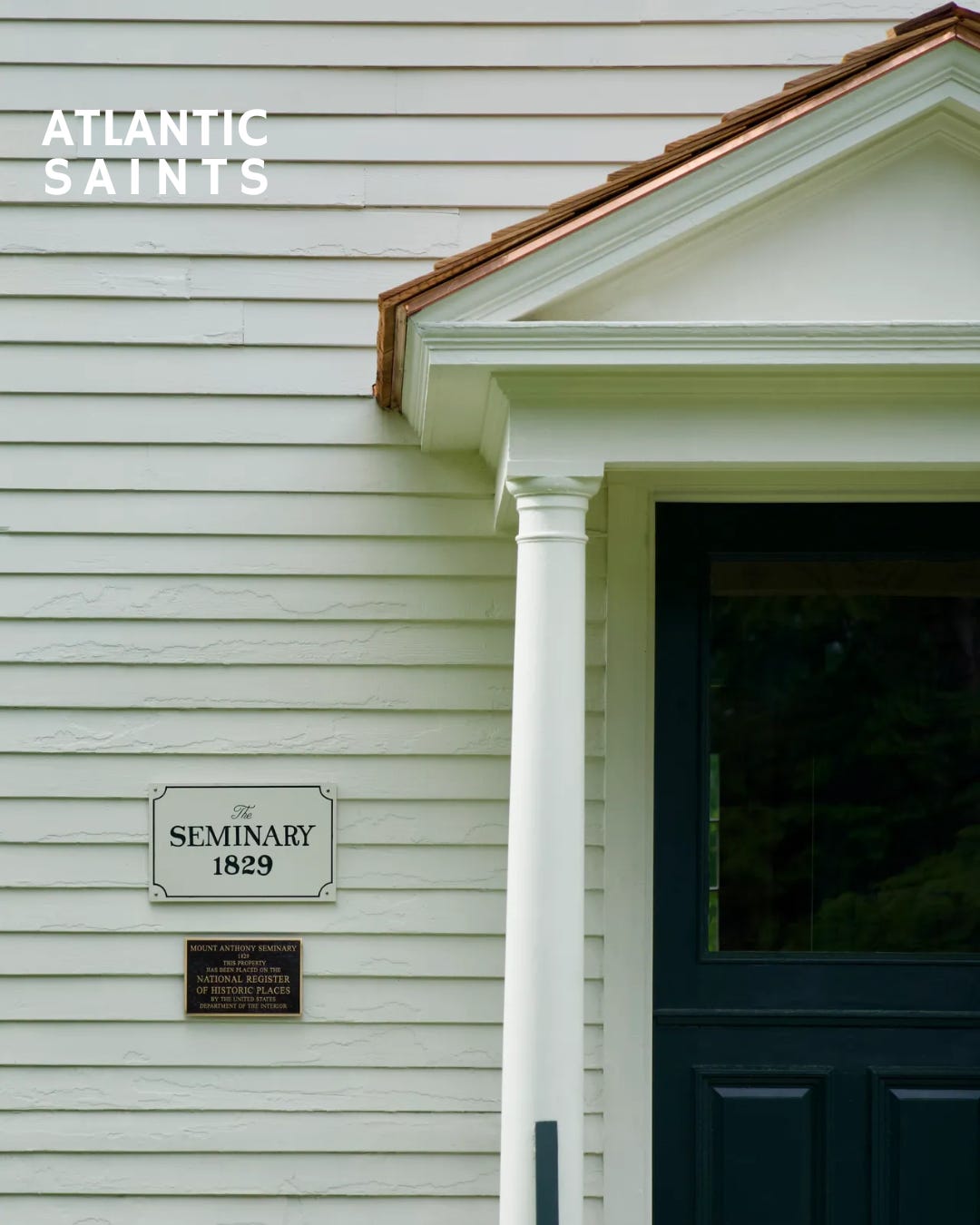
Built in 1829, the handsome Colonial building began life as a boys’ seminary before becoming coeducational, then passing through lives as a country club, a retreat and housing for writers and Bennington College faculty, and finally a private residence occupied by the same family for some sixty years.
Today it is a six-room hotel, but “hotel” does not quite describe what architect Rafe Churchill and his partners are trying to make. “It’s supposed to feel like you’re walking into the home of your eccentric aunt,” Churchill has said.
Churchill, a Bennington College graduate and cofounder of the design firm Hendricks Churchill with his wife, Heide Hendricks, originally bought the property in 2025 with a relatively modest idea: create somewhere for college trustees, alumni, parents and visitors to stay. Bennington had changed his life, and he wanted to make something useful for the place in return. Then the idea expanded.
Churchill and Casey Sunderland began imagining a hospitality company devoted to rescuing significant American buildings. Rather than turning them into museums, they would bring guests to inhabit them. The resulting venture, Place in Mind, uses The Seminary as its first proof of concept.
The philosophy can be distilled into one unusually good question, that too few ask themselves: “What are we not going to do to this house?”
Churchill describes preservation but as discovering the essential character of a building and resisting the temptation to erase its irregularities. The work at The Seminary was extensive. The plumbing, electrical systems, bathrooms, millwork and floors all required attention. But the objective was to make the intervention nearly invisible. “Leaving no mark,” Sunderland observed, “is just as much work as leaving a big mark.”
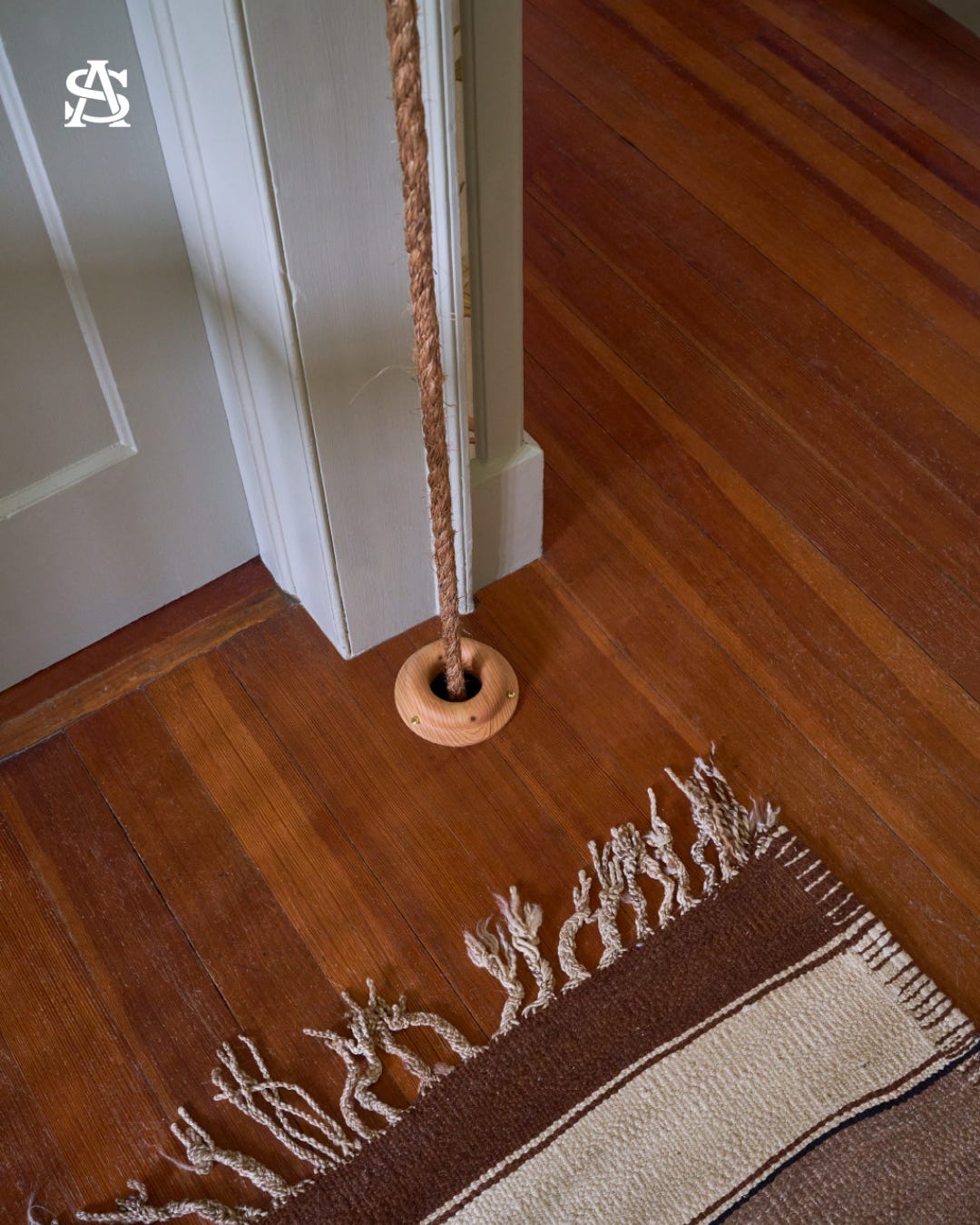
The Seminary originally possessed a twenty-one-foot bell tower that had disappeared more than a century ago. Using archival photographs, paintings and drawings, Churchill reconstructed it with the help of Bennington students, eventually lifting the completed structure by crane onto the original beams that had once supported its predecessor. The bell rope now descends through the building to the first floor living room, passing through handmade wooden “rope bosses” created by Churchill’s daughter Hollis. This is the kind of historical detail I love: completely unnecessary and somehow essential.
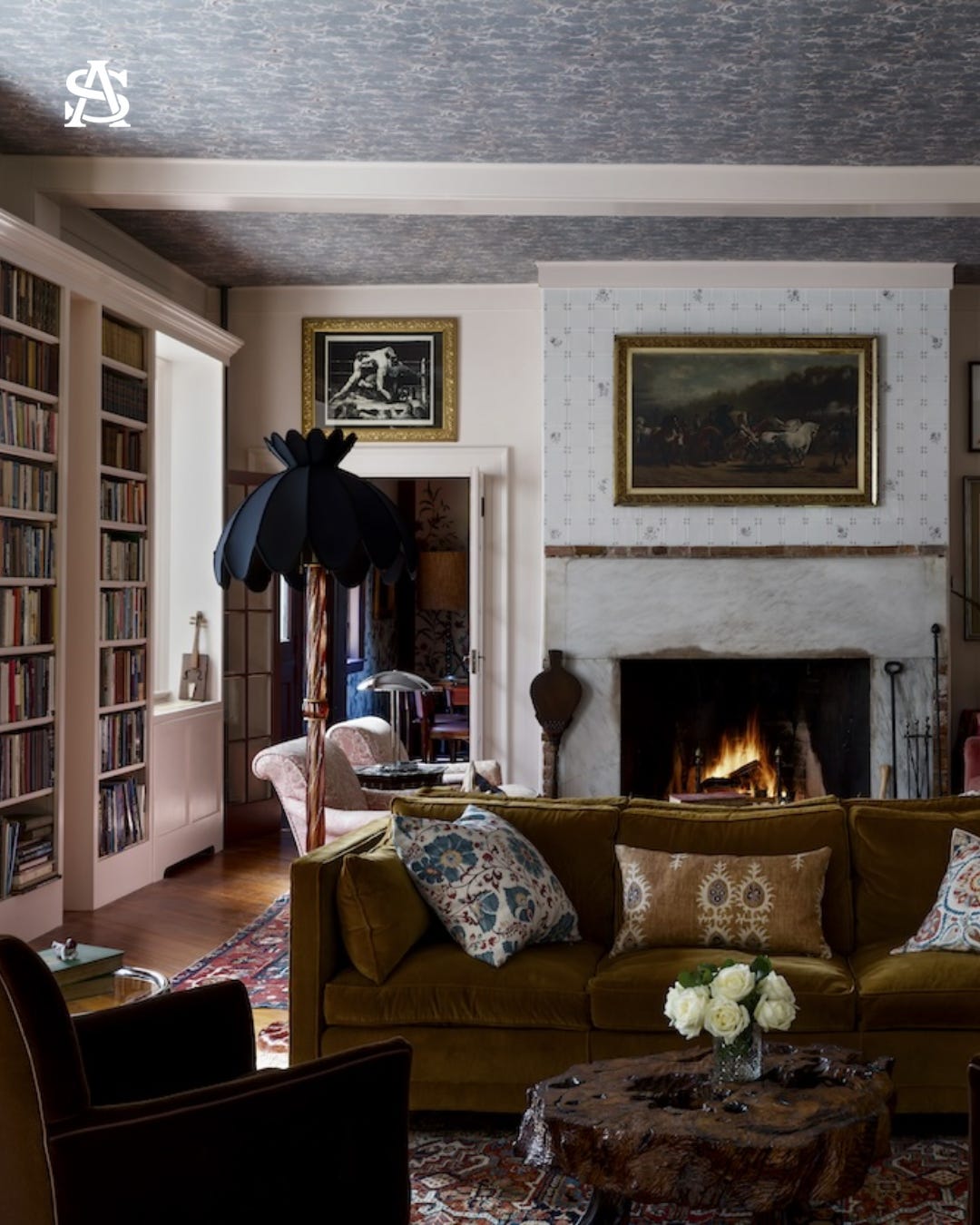
The interiors follow the same logic. When Churchill bought the house, the previous owners (a family of writers with ties to Williams College) left behind an enormous library and a piano. The books now mingle with work connected to the broader literary landscape of the region, including Bennington such as Donna Tartt and Bret Easton Ellis.
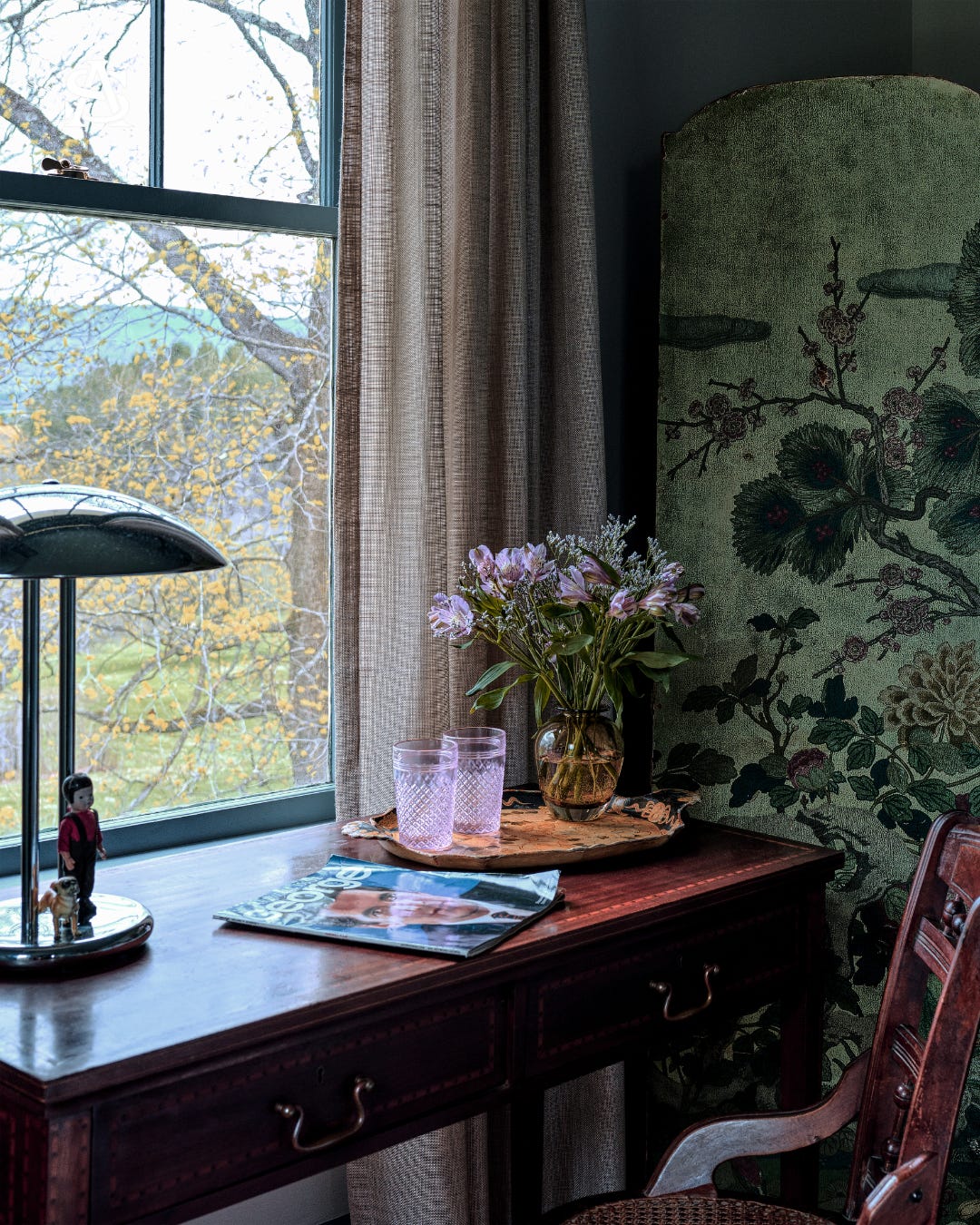
Every piece of furniture is vintage, as is virtually every piece of art. There are quilts and woven coverlets, claw-foot tubs, old writing desks and rooms painted in deep, sometimes unexpected colors. Keith Haring can appear or Ansel Adams. Elsewhere, pieces of Hudson River School painting sit within the same evolving collection.
The effect is less “historic hotel” and more like a house that appears to have accumulated good things slowly. Some of those things have migrated from another old building around the corner: The Walloomsac Inn, which was built in 1771 and itself now part of Place in Mind’s larger plans. Paintings, a thirteen-star flag, candlesticks and bits of furniture have crossed between the two properties, as if the houses are quietly lending things to one another.
The Seminary also remains tied to Bennington in ways more substantial. Architecture students from the college have worked as paid interns on the property, including helping restore its barn. The buildings are once again being built by people from the town.
America tends to save historic buildings in one of two ways. We either freeze them, leaving them immaculate but lifeless, or we modernize them so thoroughly that only the façade remembers what happened there. Place in Mind and The Seminary suggests another possibility. Let the floors creak. Keep the books. Light a fire in October and let somebody fall asleep with a novel in a chair that has belonged to several lives before theirs.
Churchill has said that the experience is “not about photographs.” It is about settling in. This is an increasingly good idea in hospitality. A good old house should not merely be admired, it should be lived in.
***
Check out at A Place in Mind and The Seminary HERE and follow along HERE.


accumulating good things slowly