
What Rowing Teaches
It May Just Be the Purpose of Life

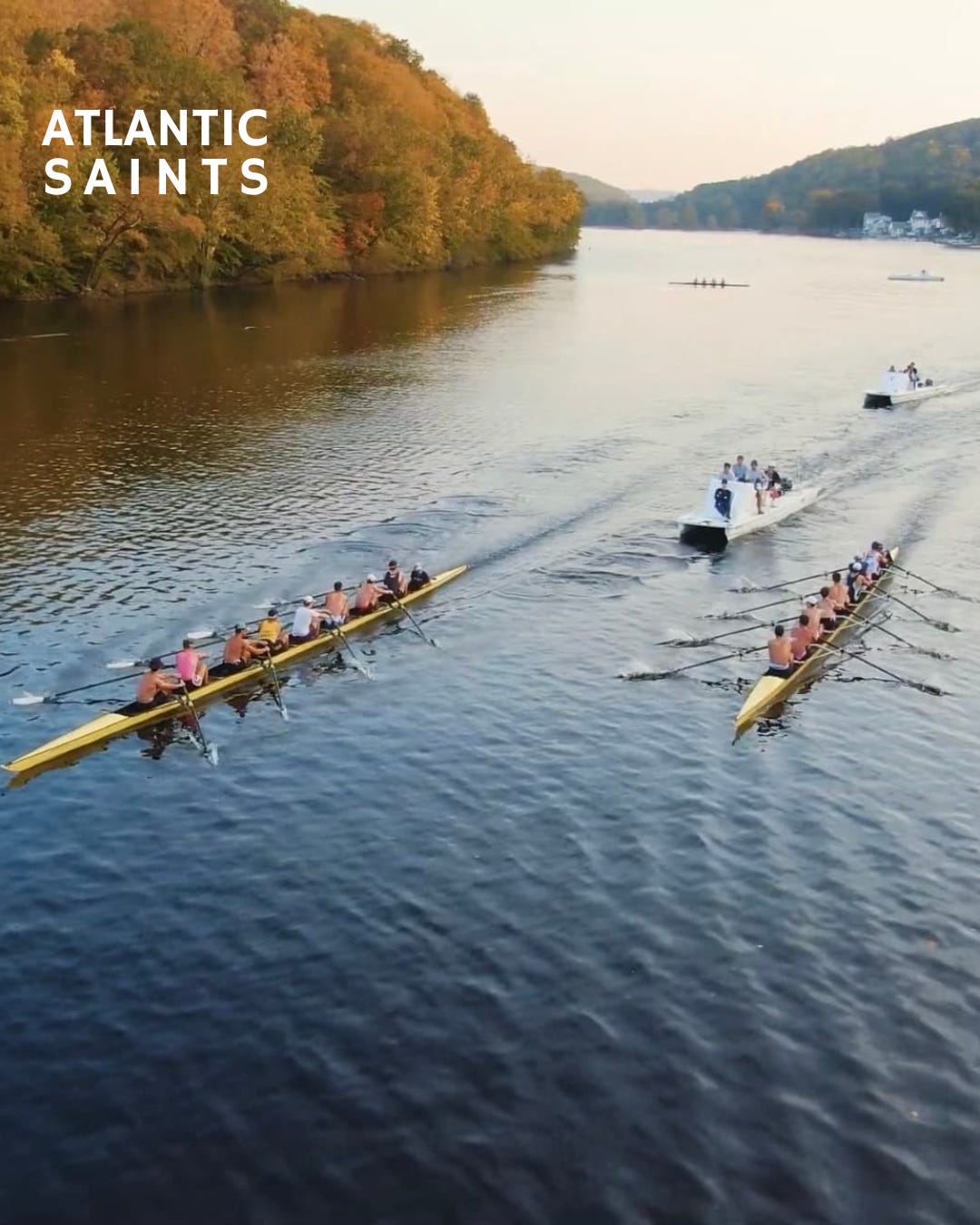
In the early 1902s, the Kent School was founded by Father Frederick Sill. He chose to build the fledgling institution on land by the Housatonic River because he planned for his boys to row, and he served as the first coach. Rowing – and its lessons – would serve as a critical part of his curriculum to form boys into men.
What it is that rowing teaches?
Anyone who has spent time in a shell learns quickly that the elegant photographs lied to them. From shore, rowing looks almost serene: long hulls cutting through silver water, oars feathering in unison, bodies moving with the grace of a metronome. It appears to be a sport of balance, rhythm, and collegiate beauty.
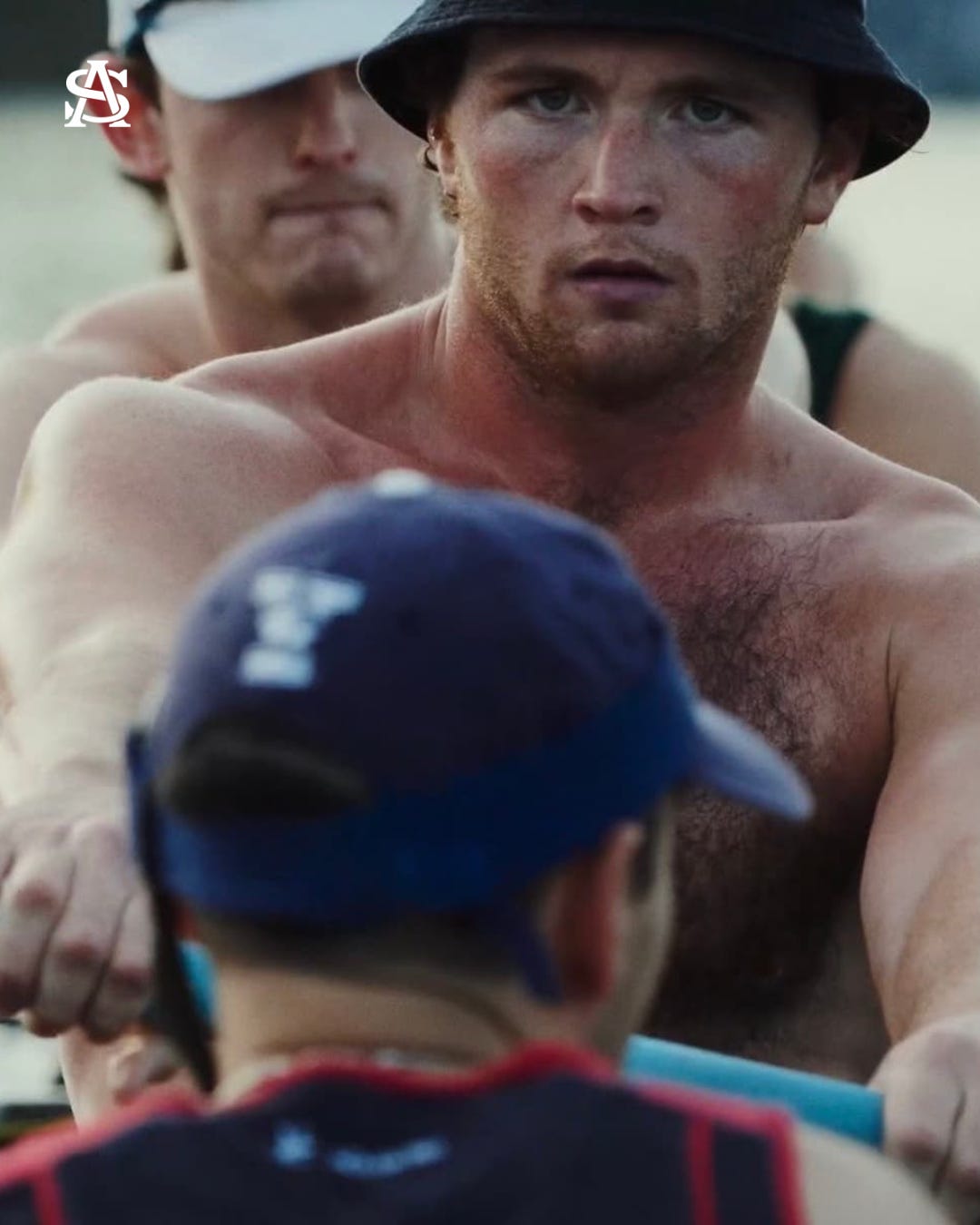
Rowing is both beauty and pain. Rowing involves a level of physical suffering almost no other sport can compare with. Pain is not an interruption to rowing; pain is the medium in which rowing occurs.
Daniel James Brown, author of The Boys in the Boat, wrote the following:
“Physiologists, in fact, have calculated that rowing a two-thousand-meter race takes the same physiological toll as playing two basketball games back-to-back. And it exacts that toll in about six minutes.
A well-conditioned oarsman or oarswoman competing at the highest levels must be able to take in and consume as much as eight liters of oxygen per minute; an average male is capable of taking in roughly four to five liters at most. Pound for pound, Olympic oarsmen may take in and process as much oxygen as a thoroughbred racehorse.
These sprints require levels of energy production that far exceed the body’s capacity to produce aerobic energy, regardless of oxygen intake. The consequence is that the muscles often begin to scream in agony almost from the outset of a race and continue screaming until the very end.
And it’s not only the muscles that scream. The skeletal system to which all those muscles are attached also undergoes tremendous strains and stresses.”
“The common denominator in all these conditions — whether in the lungs, the muscles, or the bones — is overwhelming pain. And that is perhaps the first and most fundamental thing that all novice oarsmen must learn about competitive rowing in the upper echelons of the sport: that pain is part and parcel of the deal.
It’s not a question of whether you will hurt, or of how much you will hurt; it’s a question of what you will do, and how well you will do it, while pain has her wanton way with you.”
What, then, is the lesson Sill (and all the best rowing coaches) hoped his young boys would learn on the river?
Most people act as the goal in life is to not suffer. We orient our lives to avoid pain. The goal is not pain avoidance. The goal is actually a good life. Even God suffers. It’s not a question of if you will hurt, or how much you will hurt, it’s a question of what you will do during the hurt and if you will let pain do its work in you.
How will suffering shape you? How has it thus far?
Pain can deform as easily as it can form. But endured faithfully, it can carve away vanity, deepen courage, widen compassion, and teach the soul to move in rhythm with the divine.
Father Frederick Sill was right to build his school by the river. Perhaps more schools and more lives would benefit by orienting toward the river’s flow.


A great deal of soul-searching is done in the 3rd 500 of a 2k
I love this. I am reading this from a hospital bed in a small town deep in the Peruvian Amazon, where I have been lying on my back in constant pain for five days. This helps me re-evaluate the experience and refocus. It also takes me back to my rowing days as a boy, which is a happier place than here. Thank you!